


PepsiCo Inc. PEP is traditionally considered a defensive stock. Given its global scale, healthy cash flow generation and good dividend yield, it's not difficult to understand why. However, the company is slowly transitioning toward a higher growth profile; and the investment community is yet to give it full credit. The current opportunity in Pepsi stock is driven by three factors - volume recovery, productivity and cost saving initiatives, and an attractive valuation that is at a discount versus its own historical average as well as peer Coca-Cola.
Business Model
PepsiCo manages a diverse portfolio across the global food beverage sectors, including iconic brands such as Lay's, Doritos, Gatorade, Pepsi, and Mountain Dew. Around 58% of revenue is generated by snacks, while 42% of the total is provided by beverages. This balance between food and drink creates a resilient foundation for long term growth. Not only does this dual-category presence offer structural advantages, but these advantages also cannot be matched by pure play beverage companies because PepsiCo utilizes cross-category synergies in distribution and merchandising with various large retailers.
Geographically, 60% of total revenue is generated from the North American market. The remaining 40% is provided by international markets to create a balanced global growth profile over a long duration. This structure offers exposure to various economic markets. Intense as beverage competition is, the company still maintains a very durable competitive moat. Leadership in savory snacks and distribution capabilities allow PepsiCo to adapt to changing consumer tastes for healthier and functional products over the longer term.
Recent Performance
Over the past few years, PepsiCo's volume has seen some pressure. However, the recent Q1 results showed early signs of volume recovery. Reported revenue climbed 8.5% to $19.4 billion, while organic sales grew 2.6%. Volume expansion is critical for sustainable growth in staples and shows that the company's strategy in terms of product innovation, pack size changes and international growth are working. According to management, the company added roughly 300 million new consumption occasions during the last quarter quarter, highlighting its success in expanding the contexts in which consumers use its brands. This growth illustrates PepsiCo is improving execution.
Portfolio Evolution and Demand Shifts
The company is focusing on aligning its product portfolio with the rising trend towards healthier food. PepsiCo is reformulating its products to reduce sodium and sugar while adding nutritional value to capture the shift toward functional products in higher growth categories. For example, the launch of Gatorade focuses on low-sugar and no artificial formulations to attract health conscious and younger consumers. The company is also investing in portion-controlled packs, fibre-rich products and hydration-focused offerings.
According to a recent study by Euromonitor, fortified/functional food and drink sales are expected to increase by $39 bn from 2024 to 2029. PepsiCo's focus on these categories bodes well for its growth in the coming years. This repositioning is helping the company expand its total addressable market, and defend existing share. The interesting thing is that these product innovations can be scaled very quickly. PepsiCo's distribution network and retail partnerships enable it to commercialize products faster than smaller players in the global market. This offers it a competitive advantage.
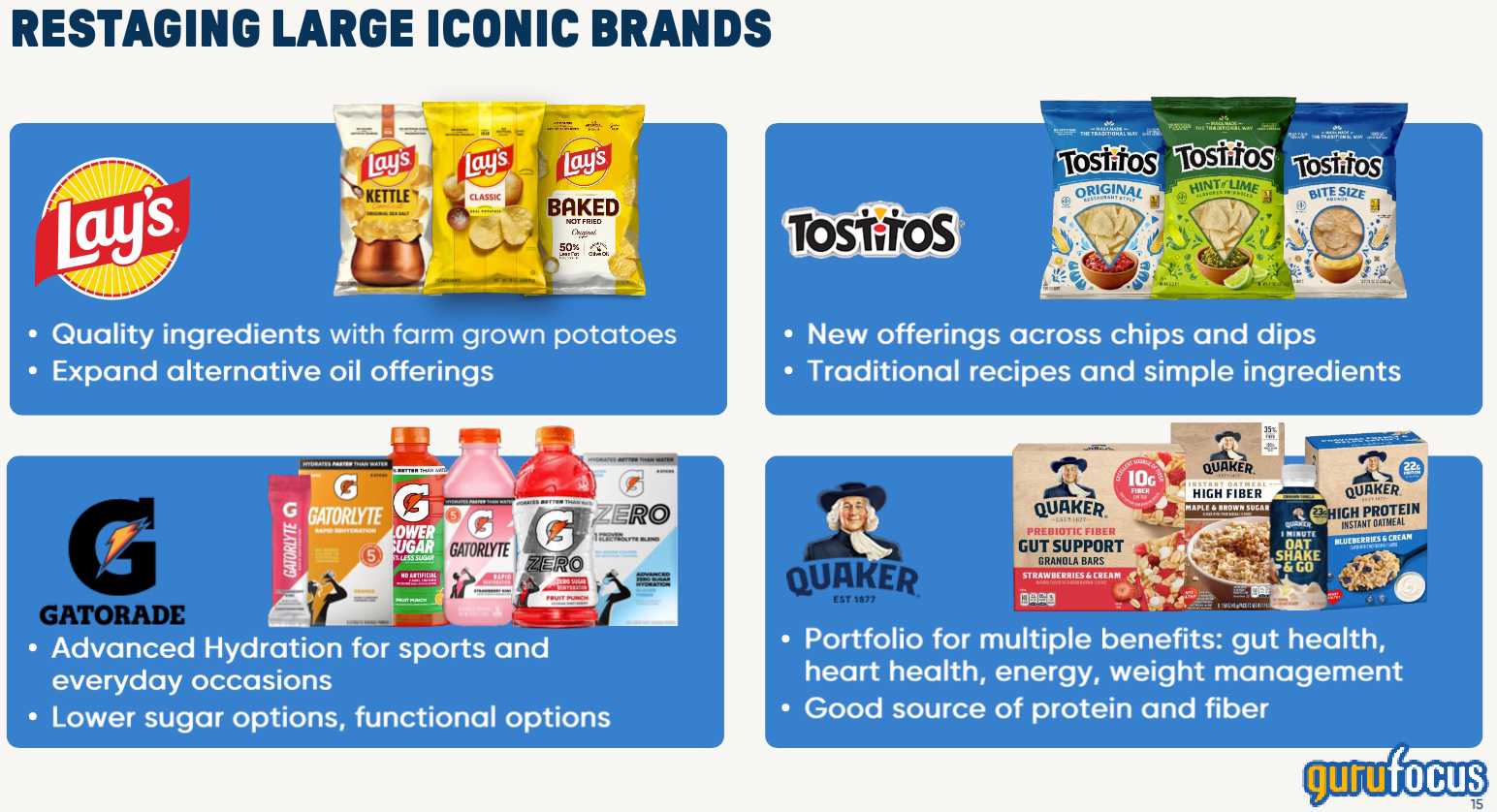
Pepsi Co. Company Presentation (CAGNY Conference)
Expansion of Consumption Occasions
The company's growth is also benefiting from targeting away-from-home consumption occasions. These channels include food services, on-the-go formats, and venues which are currently growing faster than traditional at-home consumptions. Placing brands in campuses and restaurants captures new demand that previously did not exist. This supports revenue growth and additional market share gains.
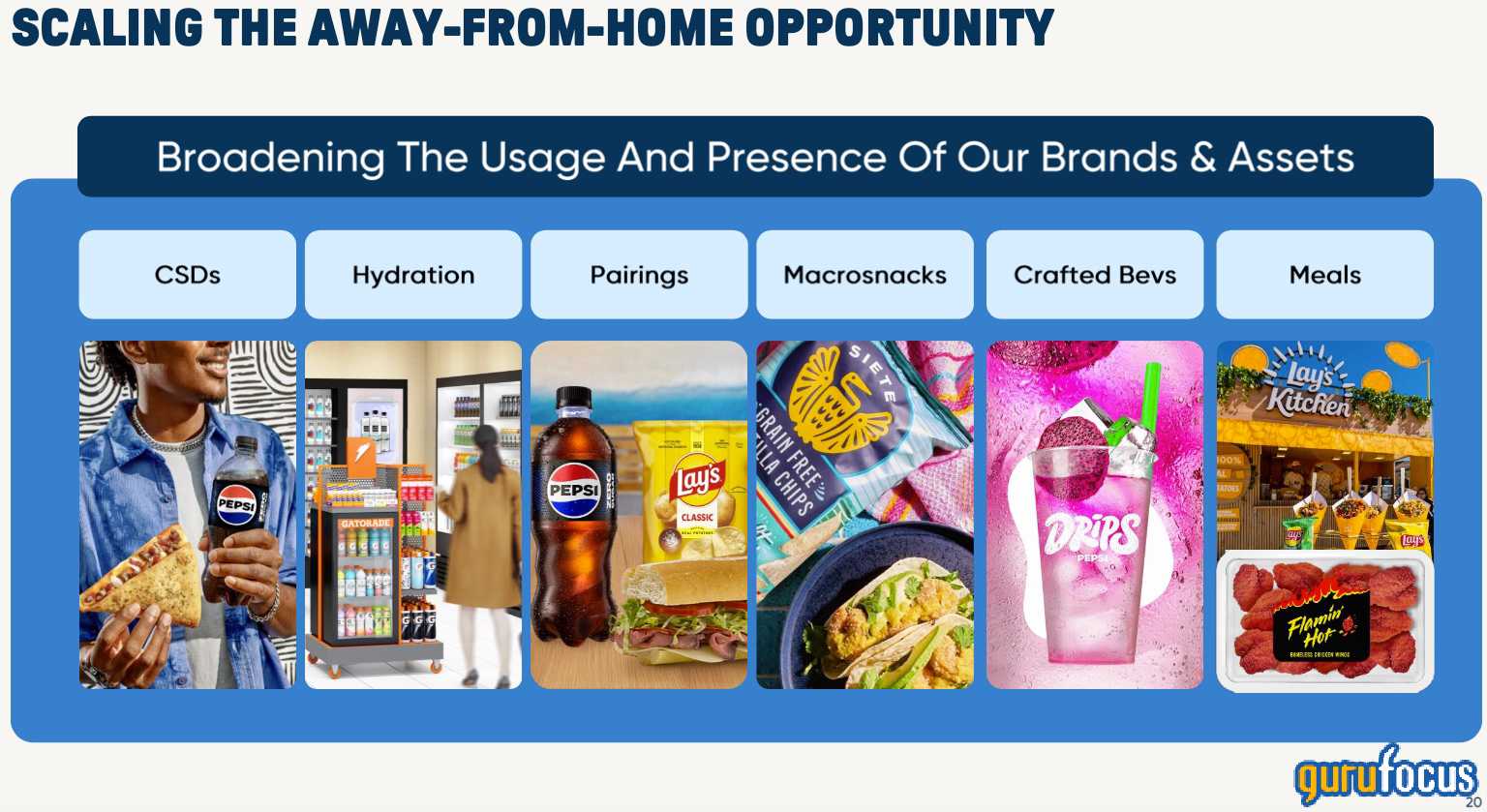
Pepsi Co. Company Presentation (CAGNY Conference)
Margin Expansion
Pepsico's margin trajectory is now being driven by structural improvements. Its operating margins reached 16.5% in Q1 2026 vs. 14.4% in Q1 2025. Last December, on its investor call, management shared a target of core operating margin improvement of at least 100 bps over the next three years. The company's margin expansion is largely driven by a multi-year productivity program primarily focused on digital initiatives, integrating food and beverage supply chain, and automation. A part of these productivity gains are being reinvested into the company to support marketing and innovation, which creates a flywheel where efficiency drives incremental revenue growth and leads to better margins. Technology has an important role in these productivity improvements. Data analytics and AI are used across demand forecasting and for improving cost efficiencies. The One PepsiCo model offers additional cost synergy. Under this program the company is integrating the food and beverage supply chain to create higher efficiency and it should become a major contributor to improving profitability.
International Markets: Growth with Increasing Profitability
The International segment is a powerful growth engine because it benefits from higher growth. In various emerging markets, the consumption of branded products remains quite low, which creates significant room for expansion as local incomes continue to rise. PepsiCo is investing in these regions to build local sourcing. It is also expanding distribution networks and customizing products for local consumers. Both market share gains and brand relevance are enhanced by this localized strategy. In addition to revenue growth, larger scale allow these markets to deliver much better margins by helping capture more operating efficiencies. These improvements should contribute nicely to the company's earnings growth over time.
One way to quantify how much emerging markets can add to the company's growth over the long run is to compare its current revenue mix with its global beverage peer, Coca-Cola KO. In FY25, PepsiCo reported $94 billion in net revenue, with North America contributing ~60% of the revenues and international markets contributing ~40% (or ~$38 bn). Coca-Cola Company, on the other hand, derived ~60% of its revenues from international markets in FY25.
This indicates Pepsi is underpenetrated in the international markets. If Pepsi were to derive ~60% of its revenues from international markets, its international revenues would have been ~$57 billion (60% of $94 bn). This implies an incremental revenue growth opportunity of $19 billion (=$57 bn - $38 bn). If we assume Pepsi can achieve this mix over the next decade, this alone can add ~200 bps to annual sales growth.
One positive aspect of PepsiCo's growth story is that it can generate good growth without relying on outside financing. Its capital-efficient business model generates healthy cash flow, thanks to a negative cash conversion cycle, with the company typically receiving payment from retailers before having to pay its suppliers. This allows it to finance growth from within instead of issuing more shareholder equity.
Over the last several years, PepsiCo has generated meaningful revenue and profit growth while returning a good quantity of cash to shareholders, thanks to its healthy cash flows that were more than enough to cover its growth investments.
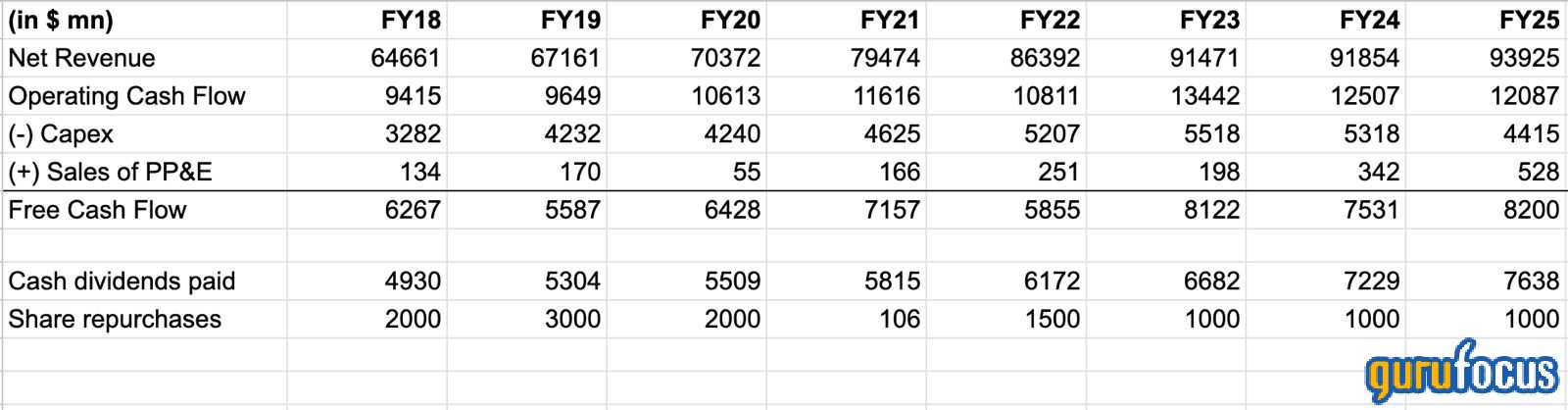 PepsiCo's Growth, Capex, and Free Cash Flow (Company 10-K filings)
This combination of healthy cash generation and good revenue growth prospects makes PepsiCo a good long-term compounder, and gives me confidence that future growth will directly correlate to strong earnings growth and shareholder returns.
Valuation
PepsiCo is currently trading at a forward P/E of 16.61x, which is a discount versus its historical average in the low 20s and Coca-Cola KO. The company has a Gurufocus Value rank of 10/10 indicating attractive valuation.
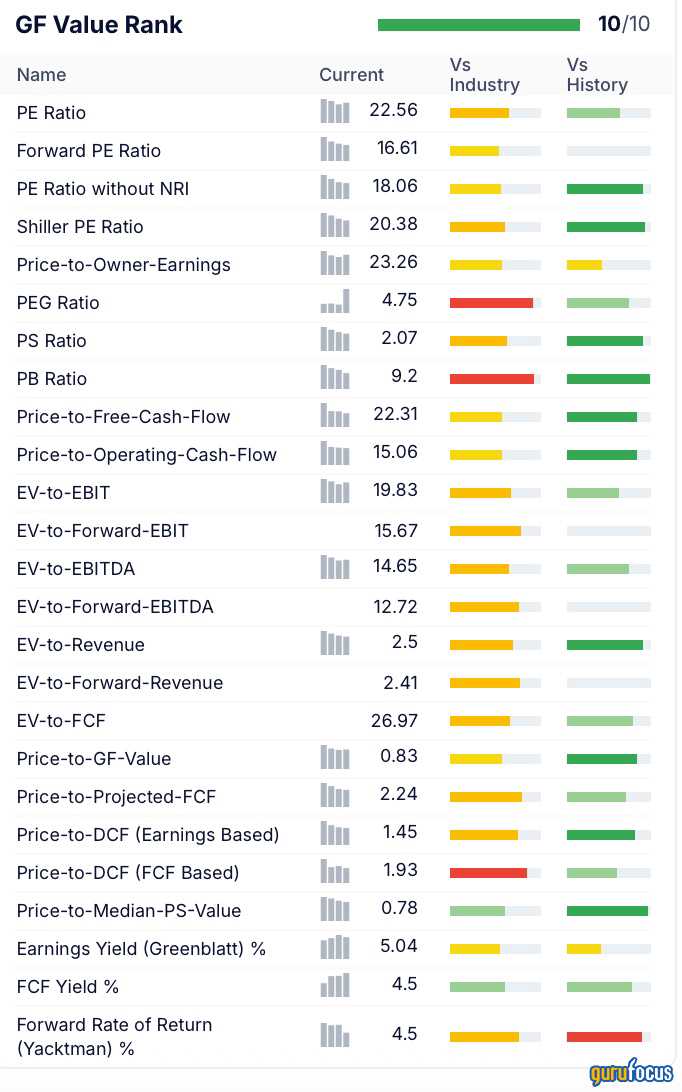
Pepsi's Gurufocus Value Rank(Source: Gurufocus)
Among prominent long-term investors, who hold positions in Pepsi is Donald Yacktman. Pepsi is among the top 10 holdings of Yacktman Asset Management (Trades, Portfolio) (Trades, Portfolio) and was over 4% of the total portfolio holdings. Interestingly, he also has a long position in Coca-Cola but it is only around ~2% of the portfolio. I believe Pepsi's relative undervaluation and good international growth runway make it an attractive stock.
The current valuation is also compelling given the improving growth profile. The firm is transitioning away from pricing-led growth it saw over the last couple of years toward volume-led growth. Volume-led growth is usually more sustainable and suggests that demand from consumers is actually getting much stronger. Despite this, the market has not yet fully reflected the improvement in the stock's trading multiple.
Unlike pure play beverage competitors that only focus on drinks, PepsiCo uses its portfolio mix to provide multiple growth levers while significantly reducing risks. Further, productivity actions and tech initiatives should help support sustained margin expansion. There is potential for a gradual re-rating as these improvements become visible. At the same time, the business retains essential defensive traits like global scale and solid free cash that remains resilient throughout many different and challenging economic cycles. This mix of durable growth and near term volume and earnings momentum suggests an attractive risk reward.
Risks
Despite a strong outlook, performance could still be impacted by following risks. Input cost inflation remains elevated because extreme commodity price volatility and rising geopolitical risks may pressure profit margins well beyond the current corporate hedging periods. The company also competes in intense categories where the battle for market share and retail shelf space is never ending. Execution risk key remains a factor due to heavy investments in technology. Technology investments provide longer term benefits, but total expected returns could be negatively impacted by inefficiencies during implementation. Finally, the global footprint exposes the company to currency translation and regional economic uncertainty that could negatively affect results.
Conclusion
PepsiCo is often viewed as a defensive stock. However, a closer look reveals the company also has good growth opportunities moving forward with major brand restages, increasing away-from-home market share gain opportunity, and structural cost reductions. The valuation is also attractive with the stock rated 10/10 on Gurufocus value rank. The company has returned to organic volume recovery, and its scale and diversified portfolio should help navigate inflation and other risks. The company is a good example of a defensive business with momentum. Strategic transformation should continue to support this incremental growth and drive a potential upside for the stock.

