


On July 30, 2026, Capricor Therapeutics Inc (NASDAQ: CAPR) suffered a sharp decline of over 45%, reaching a new 52-week low following a negative vote from the FDA’s advisory committee on its lead drug Deramiocel. This development triggered a downgrade by Oppenheimer, citing increased regulatory uncertainty.
- Capricor’s Price-to-Sales ratio remains elevated relative to its historical median and industry benchmarks, reflecting market expectations of future growth despite current unprofitability; earnings-based valuation metrics like P/E are not applicable.
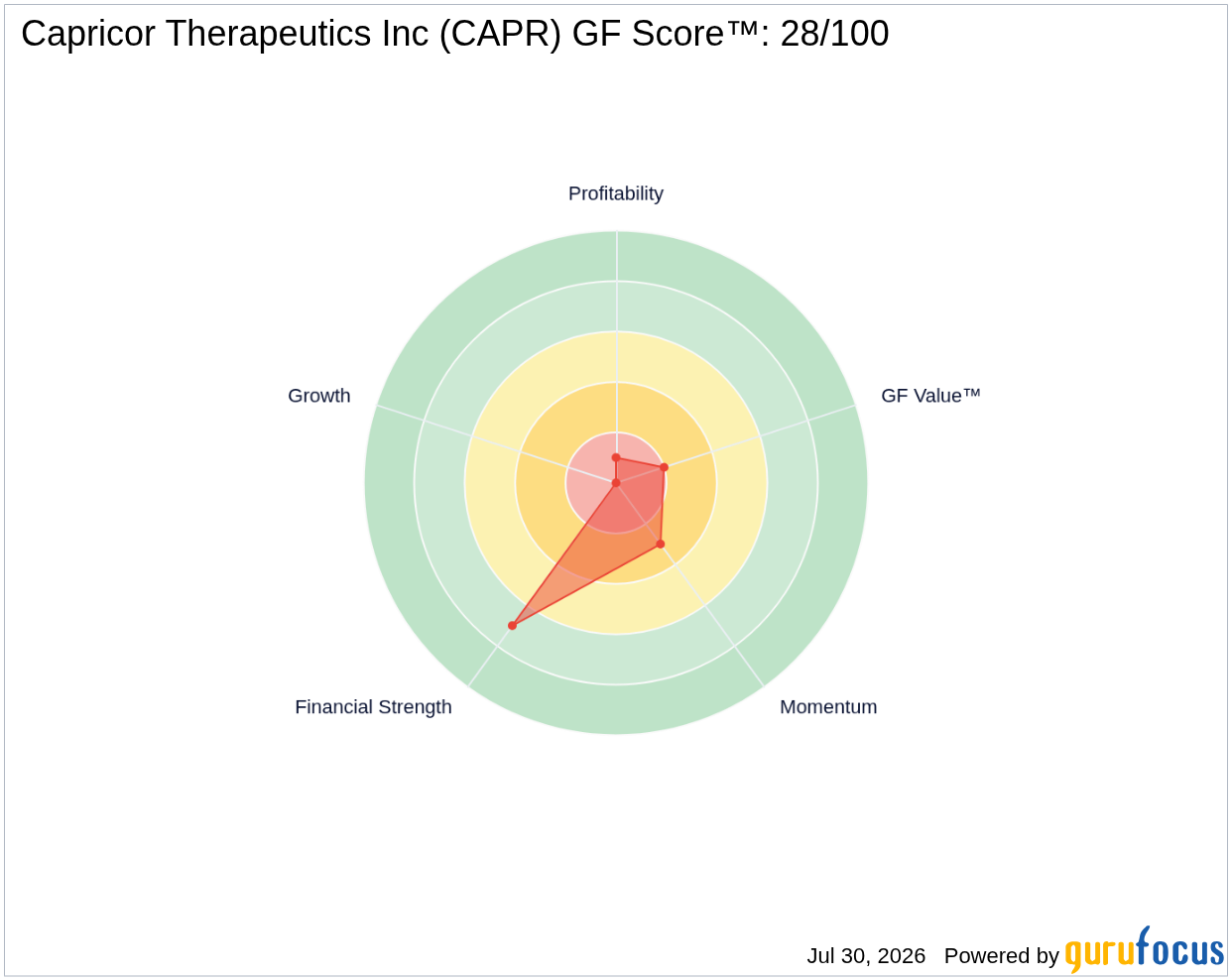
- GF Score™ stands at a low 28/100, indicating significant challenges in profitability and growth despite moderate financial strength.
- Insider activity shows no recent purchases but $3.1 million in insider selling over the past three months, signaling cautious sentiment from company insiders.
What's Behind the News?
The FDA advisory committee voted 9-3 against endorsing Capricor’s Deramiocel, an allogeneic cardiac-derived cell therapy targeting cardiomyopathy in Duchenne muscular dystrophy (DMD). This follows a Complete Response Letter (CRL) issued last year, which raised concerns about the drug’s approval prospects. The committee’s negative recommendation significantly dims the regulatory outlook for Deramiocel, increasing the likelihood of another CRL and complicating Capricor’s path to market.
Capricor Therapeutics Inc is a clinical-stage biotechnology company specializing in cell and exosome-based therapies primarily for Duchenne muscular dystrophy, a rare and fatal muscle degenerative disease. The company’s market capitalization is approximately $222 million, and it operates within the healthcare sector’s biotechnology industry. Its product pipeline focuses on innovative treatments for cardiovascular and muscular disorders, with Deramiocel currently in Phase 3 clinical trials.
Is CAPR Overvalued on a Price-to-Sales Basis?
Capricor’s current Price-to-Sales (P/S) ratio is not explicitly reported but can be inferred as elevated given its zero reported sales and a market cap of $222 million. Historically, the industry median P/S ratio stands around 19.4x, indicating that the market prices CAPR’s shares with expectations of significant future revenue growth despite the absence of current sales. This premium valuation reflects investor optimism about the company’s pipeline potential, particularly Deramiocel’s prospects, although recent regulatory setbacks challenge this narrative.
It is important to note that earnings-based valuation metrics such as the Price-to-Earnings (P/E) ratio are not meaningful for Capricor, as the company is unprofitable and cash-flow negative, with a trailing twelve months (TTM) EPS of -2.32. The GF Value™ metric, which estimates intrinsic value based on historical financial performance, is not reliable in this case due to the lack of positive earnings and sales. Nevertheless, the GF Value™ serves as a directional warning, signaling that the current market price may not be justified by fundamentals amid regulatory uncertainty.
What Does CAPR's GF Score™ Tell Us?
The GF Score™ aggregates multiple dimensions of a company’s financial health, including profitability, growth, valuation, financial strength, and momentum, to provide a holistic view of its investment quality. Capricor’s GF Score™ is a low 28 out of 100, reflecting significant weaknesses in profitability and growth despite moderate financial stability.
| Metric | Rating |
|---|---|
| GF Score™ | 28/100 |
| Financial Strength | 7/10 |
| Profitability | 1/10 |
| Valuation | 2/10 |
| Momentum | 3/10 |
Capricor’s strongest area is financial strength, scoring 7 out of 10, supported by a high current ratio (8.42) and comfortable interest coverage, indicating sufficient liquidity and manageable debt levels. However, profitability ranks very poorly at 1 out of 10, consistent with its negative earnings and cash flow. Valuation and momentum also score low, reflecting the market’s cautious stance amid recent setbacks. Overall, the GF Score™ underscores the company’s distressed status with limited operational profitability but reasonable balance sheet health. For more details, visit the CAPR stock page.
What Are Gurus and Insiders Doing with CAPR?
GuruFocus tracks that two premium gurus currently hold Capricor shares, with one adding to their position and another trimming it in recent quarters. This mixed guru activity suggests a divided outlook among sophisticated investors, reflecting the company’s uncertain regulatory and commercial prospects. Meanwhile, insider activity reveals no insider buying but significant selling, with $3.1 million worth of shares sold over the past three months and no purchases reported. This insider selling may indicate a lack of confidence in near-term stock appreciation or regulatory outcomes. Such insider and guru ownership signals provide valuable context beyond traditional financial metrics, highlighting nuanced market sentiment.
What This Means for Investors
Capricor Therapeutics remains a high-risk, unprofitable biotech company with a market valuation that implies substantial future growth, particularly from its lead drug Deramiocel. However, the recent FDA advisory committee’s negative vote and the likelihood of another Complete Response Letter cast a shadow over this growth narrative. The elevated Price-to-Sales ratio relative to historical medians and the biotech industry signals that investors are pricing in optimistic outcomes that may now be less probable. The low GF Score™ and significant insider selling further emphasize caution. Investors should weigh these factors carefully and monitor regulatory developments closely. For ongoing updates and detailed metrics, visit the CAPR stock page.
Frequently Asked Questions
What is CAPR's GF Score™?
CAPR’s GF Score™ is 28 out of 100, indicating weak profitability and growth but moderate financial strength. This composite score reflects the company’s current distressed status.
Is CAPR overvalued or undervalued?
Based on Price-to-Sales analysis, CAPR’s valuation is elevated compared to its historical median and industry norms, implying market expectations of future growth. Earnings-based valuations like P/E are not meaningful due to the company’s unprofitable status.
What is CAPR's P/E ratio compared to historical?
CAPR does not have a meaningful P/E ratio as it is currently unprofitable, with negative earnings per share. Instead, financial strength metrics such as liquidity and debt coverage provide better insight into its financial health.
This stock alert was generated using automated technology and GuruFocus financial data to provide readers with timely and accurate market reporting. This content was reviewed by GuruFocus editorial team prior to publication. Please send any questions or comments about this story to [email protected].

