


Micron Technology MU, a memory and storage semiconductor leader riding the AI infrastructure boom, delivered another blockbuster quarter, yet its shares slipped about 0.6% in Friday's regular session after Citi cut its price target to $1,150 from $1,400 while keeping a Buy rating. The downgrade wasn't a vote against Micron's business. Instead, Citi expects the explosive run in DRAM and NAND pricing to cool over the next four quarters, reminding investors that even the hottest AI winners eventually face tougher comparisons.
Micron's numbers still look like they're running in overdrive. Revenue rocketed to a record $41.46 billion, up from $23.86 billion in the previous quarter and $9.30 billion a year ago. GAAP net income climbed to $28.24 billion, while operating cash flow reached $25.39 billion. Management expects fiscal fourth-quarter revenue of $50 billion, plus or minus $1 billion, with an extraordinary gross margin of around 86%. Importantly, that forecast already assumes memory-price gains will moderate. The valuation picture is becoming harder to ignore, though.
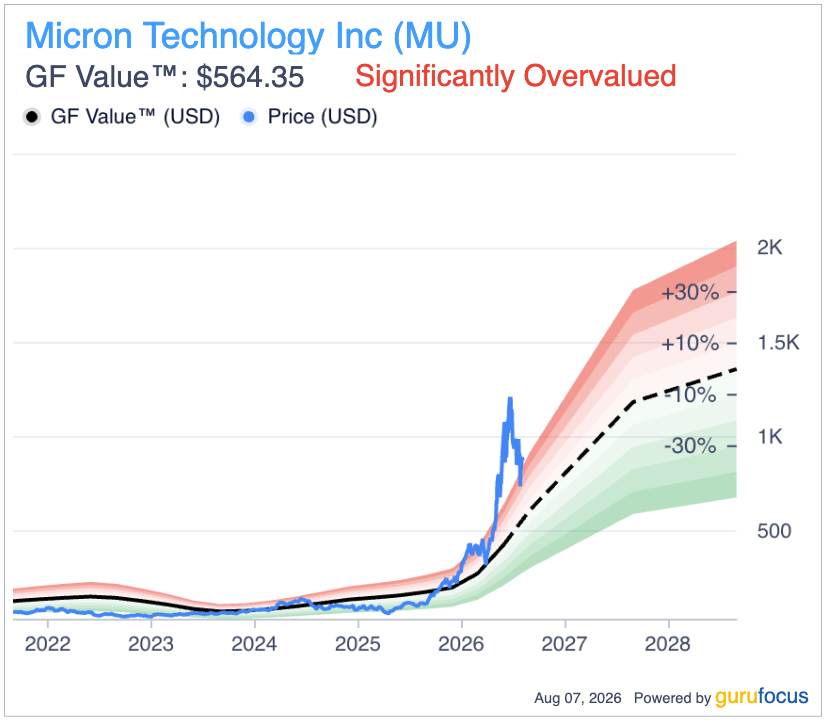
The GF Value chart estimates Micron's intrinsic value at about $564, well below its recent share price near $874, leaving the stock trading roughly 55% above fair value. That premium tells you the market has already priced in plenty of AI optimism, raising the bar for future earnings surprises.
That's why the market's focus is shifting. Citi's new target still sits about 31% above Micron's recent trading price, showing Wall Street remains bullish over the long haul. But the easy gains from soaring memory prices may be fading. From here, investors will be watching whether Micron can keep growing through higher volumes, tighter execution and disciplined spending instead of relying on another pricing boom. With a planned $27 billion capital investment for fiscal 2026 and expanding relationships with major AI customers, the growth story is still very much alive. The next chapter, however, will be won by execution—not just higher memory prices.

